A factor that we as humans always crave to control are our feelings and emotions. And despite making major strides being made in the personal development world, this is one aspect that we usually tend to struggle with. Today, let’s take a look at why do we face so much difficulty checking our emotions, and is there a way (if any) for us to be more in the driver’s seat with this much abstract facet of life.
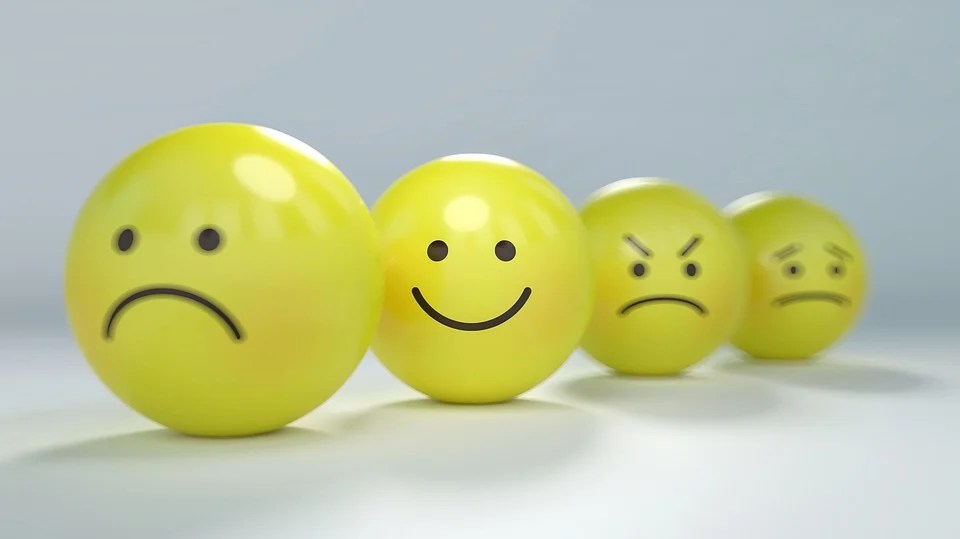
Your emotions are the slaves to your thoughts, and you are the slave to your emotions.
Elizabeth Gilbert
There is a very common belief we have as human beings about ourselves, and I am fairly certain you might have read or heard something similar to the following statement.
“Humans are the most rational beings among all the species on earth”.
And to me, this statement is, pardon my language, a bunch of bull-crap. I don’t have a lot of experience in life, but I think I have enough to conclude that humans aren’t rational beings.
Humans are rationalizing beings, who believe themselves to be making rational decisions.
To explain my conclusion, let me reference the anatomy of the word “rational”. Rational originates from the Latin word, “ratio”, which means reckoning or reason.
We can reason (pun intended) from the aforementioned statement that for a decision to be considered rational, there has to be, well a reason behind us making it. And interestingly, we always have reasons behind our decisions, but they are many a time as far from logic as you are when you are lying to your friends about reaching a destination in 5 minutes when you have just woken up.
What are these reasons based on, you ask? Well, they are based on the very topic of this article, emotions.
The Complexity Model of Emotions
Life used to be very simple. The sole reason a lot of us used to do almost everything I did, all day, everyday, was essentially to be happy, if not at the said moment, then maybe in the future. And I am assuming so too. But with growing up, a simple life just stopped cutting it for us. We wanted to be complex for us to look cool in front of simpletons.
Happy, afraid and sad aren’t enough for us anymore. This led to the introduction of emotions like guilt, anger, resentment, disappointment and more of the likes.
Another way our emotions differ through the various phases in our lives is that they start to have a longer shelf life.
A toddler, cries one instance for reasons unknown, and starts giggling uncontrollably at as stupid thing as jingling keys in front of his face. I mean, he doesn’t have any doors to unlock, why does he become so happy despite a trauma he was so recently facing (the trauma, by the way, is territory I am not willing to explore). An adult however, has the ability to hold grudges against someone he doesn’t event know, for something the person did 17 years and 12 days ago.
There are now two factors now adding to the complexity model of our emotions. We have more emotions than we did earlier, and they last longer. It now seems acceptable that emotions are a difficult to handle facet of our lives. But, is there a way that we can actually be better at dealing with our emotions?
An Attempt at an “Emotion Handling Handbook”
Despite the complexity, there is one thing, which if accepted will change the way we look at our feelings.
You can’t kill or finish your emotions.
Our emotions arise due to our own thoughts. And since we cannot kill our thoughts, we consequently cannot kill our emotions. There are usually a couple of ways we can deal with them. I am not recommending or portraying the benefits of one over the other. I would rather have you, the reader, make a choice for yourself.
Camouflaging

“I am fine” is an instant conversation killer, filler or placeholder to an ensuing out pour of the reality.
This is one way that many of us deal with, and recommend others to deal with emotions. In this method, we tend to ignore an ongoing mental crisis and focus on other distracting activities. These activities pleasurable or otherwise include, but are not limited to, overworking, ignoring or diverting conversations around sensitive sentimental issues and using recreational drugs or alcohol.
While this provides instant gratification, more often than not, this results in the suppressed emotions manifesting in less than desirable ways like depression, anxiety insomnia and other serious disorders.
Channelizing

Interestingly enough, in addition to instigating our decisions, emotions can also act as fuel to more productive activities. And even better, this helps with improving other aspects of our lives as well.
A typical example of this is the “guys start working our after breakups” cliche.
The intent behind this is to eventually forget the original emotion, and carry on with the newfound activities picked consequently. Activities pursued here are mostly things that have a positive impact in our lives, things like exercising, building other income streams, self-improvement and other activities of the sort.
Conclusion
Now there is some subjectivity around the separate categorization of as well. Some of us could still consider channelizing a subset of camouflaging. My reasoning behind this is that while camouflaging elicits negative results, while channelizing results in positive change.
But yet again, I will urge you, the reader, to interpret this however you will.
If you stuck around this far, thank you for your time. If you enjoyed this, share this with one friend of yours whom you think will benefit from reading this. Thanks for reading, and I will see you in the next one.

 Facets of Life
Leave a comment