We live in an age of abundance. Everything we want currently is available in such extremes that life is now a race to solve bigger problems like space travel and masking glasses for “preventing germs” (There is a hint of sarcasm in this statement, please do not cancel me).
However, we are seeing a lot of steam being picked up by a group of people who believe in leveraging less. What exactly is minimalism? And is it all sunshine and rainbows? Let’s take a look.
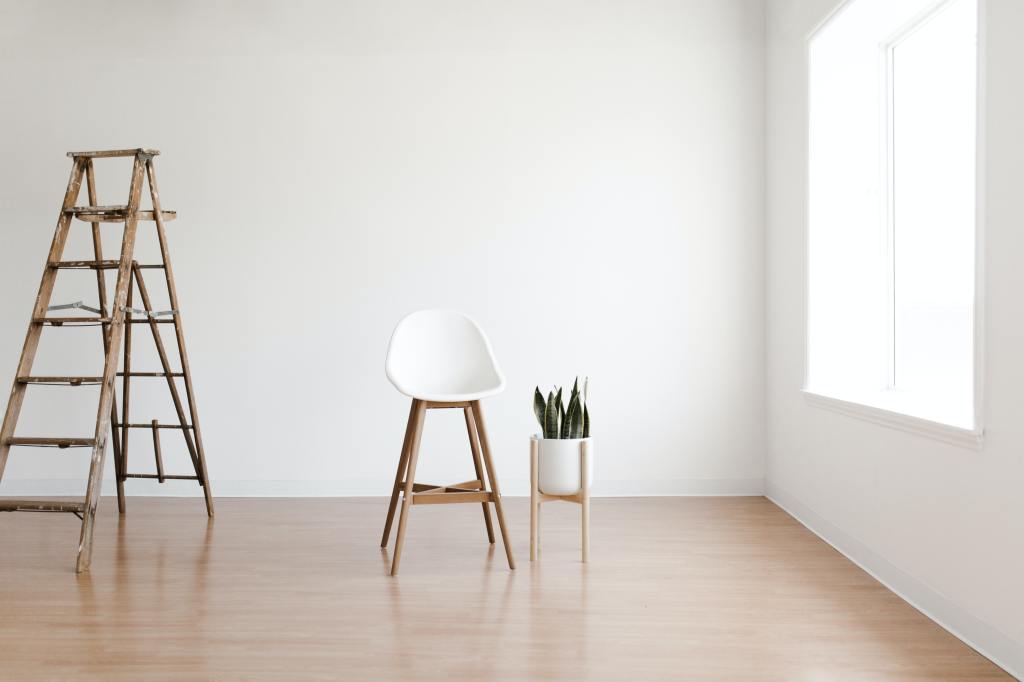
“A well-used minimum suffices for everything.”
Jules Verne, Around the World in Eighty Days
What is minimalism?
Every single one of us desires to have more of everything. More time, more energy, more money, more respect, more skills and so on. As a matter of fact, the entire world around us is designed for us to not only strive for more, but do more.
Organisations these days want their employees to work on more projects. Social media companies want their users to spend more time on their apps. Your parents want you to eat more because you look like you’re famished due to all the work your company has you doing and social media bingeing. You want more of the mentions I made in my previous paragraph. Hell, even I want you to read more of my articles (Please read my articles? Please? Fine, don’t read them. Let’s move on).
Interestingly, no matter how prevalent group think is as a real concept these days, the world today has more (pun intended) contrarians than ever. Such a contrarian group, called minimalists, is gaining a lot of mainstream light. A group that suggests more might not be the only way. A group that suggests imbibing minimalism in your life has a lot of tangible benefits.
Benefits of minimalism
There are a lot of statistics that also support the implementation of minimalism in our daily lives. Here are some of them.
- According to LA Times, the average American home contains 300,000 items.
- We lose up to nine items every day which brings it up to approximately 198,743 items in a 60 year lifetime.
- An average Indian person spends anywhere between ₹1500 and ₹2500 on clothing every month. That is a spending range of ₹1.8 lakh and ₹3 lakh every year.
Iron clad logic, right? Sure looks that way.
Due to the robust coherence in this logic, a considerable number of industries are taking on minimalism as their guiding principle. Art, architecture, design, décor and even minimalist nutrition have almost become commonplace in today’s day and age.
And people pay good money for possessions like these. Have you seen Kim Kardashian’s sink? It’s almost like a slab, but has a slit in it, which drains the water away. I doubt she asked a random stone cutter to cut that slit (or did she spend minimal money on that?).
I truly believe that there is solid logic and evidence in adopting minimalism and there is evidence that supports this as well.
- According to a study by the Journal of Neuroscience with women participants, women living in cluttered homes experienced elevated cortisol levels than women living in uncluttered homes.
- Another study by the same journal suggested that the more objects in your visual field at any time, the more tired you’ll feel, which is another reason to “declutter” your life.
There are various logical extensions that can be made to this philosophy. Think about it. If we do less of what we don’t like, we will have more time to do the things we want to do. If we spend less money on things we don’t want, we will have more money to spend on the things that we do want. If we expend less energy doing things that don’t require our energy, we will have more to expend on things that do require it.
So, is this what everyone should do to improve the quality of their lives? Is it all positive across the board? While I have been constantly raving about how minimalism is such a great principle, there are things I’d like to highlight about potential outcomes and pre-steps of having a minimalistic lifestyle.
The other side of minimalism
Know thyself
As human beings, almost everything we do in life is aimed to make our lives simpler. Minimalism is yet another principle that helps us achieve this objective. But one thing that is very important to consider before you start chucking things out of your house, is that you have clarity of what you need, and what you don’t need.
Let’s go back to the logical extensions paragraph. A lot of times we don’t have clear comprehension of what is important to us and what isn’t. Do we know exactly what we like and don’t like? Have we put in the time and effort to classify things as required and not required?
More often than not, the answer would be no.
Self-discovery should precede adoption of minimalism.
Anyway, self-discovery is a topic that people way more intelligent than myself have talked about, and I will ket you do your own research before you decide what you want to keep and what you want to burn.
Minimalism in selection, not in action
The whole point of adopting a minimalistic lifestyle is to make more time for things you want to do and less on what you want to eliminate, but:
Use minimalism to identify what to do, but never to define how much you do.
It is very easy to get carried away while eliminating things, habits and actions from your life. But what is of the utmost gravity is that practice makes progress, and progress is what helps us approach perfection.
Own your idea of minimalism
I’ll take design and aesthetics as examples, because that’s where minimalism is a lot more common. Earlier, decor used to be an intricate and artistic endeavour. Artisans used to create handcrafted furniture items which people proudly presented in their households.
But in today’s day and age, minimalist designs are a lot more prevalent, which has led to these detailed designs becoming very obscure. Is there another reason that minimalist designs are more “fashionable” now? (Read: Consumerism?). Consequently, no one wants to put the effort anymore, because minimalistic stuff sells.
What I want to emphasise is:
Your idea of minimalism should be defined by what you want, and not because of external influences.
So, don’t get a Kim Kardashian sink because she uses it. But use it because you want to use it.
If you stuck around this far, thank you for your time. If you enjoyed this, share this with one friend of yours whom you think will benefit from reading this. Thanks for reading, and I will see you in the next one. 🙂

 Facets of Life
Leave a comment