I am a big fan of stationary. New pens, pencils and other school supplies always fascinate me. I rarely leave a book store without buying a new book or a stationary item to add to my collection.
For those wondering, no, I am not a student anymore.
During one of our customary weekend mall visits, my wife and I came across a stationary store named William Penn. William Penn is a luxury writing instrument store, which sells products from brands like Sheaffer, Kross, Mont Blanc and others. They also sell other products like fancy backpacks, leather office bags, belts, wallets and more.
I am a regular customer, I bought two pens as gifts for my father from this brand. As you may have guessed, I convinced my wife to go to the store with me.
The secret of happiness is not found in seeking more, but in developing the capacity to enjoy less.
– Socrates
All the products in the store are placed in nice lighting. The lights are placed such that every chrome surface from these pens shines brightly, as if to draw more attention to them. Like a kid in a candy store, I started looking around, trying to find the next pen I would add to my collection of pens.
My wife is too sweet on me, and she bought me a new pen from Kross. It is the most amazing pen I have written with my whole life. I prefer writing with ball point pens, and this is a black body, black ink ball point pen. It has a chrome finish which makes the pen look like a royal product.
The moment we came out of the store, I was looking forward to writing with it. The bike ride back was filled with enthusiasm, as veiled as it could be due to being in public.
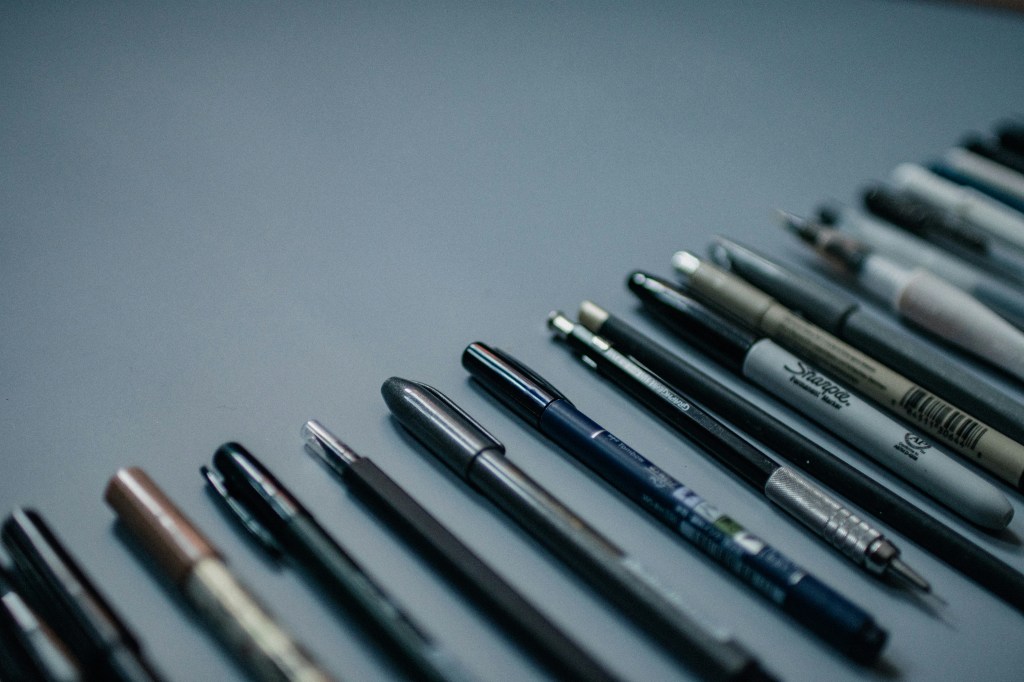
We reached our apartment, and as soon as I could, I leapt to reach my diary from my bag. Before I could spot the diary, I spotted three other pens that had been sitting in my bag, waiting for me to start writing with them, because the one I had been using actively wasn’t finished yet.
That wasn’t a deterrent for me at the time. I ended up enjoying writing with the pen a lot that night. As I tucked the new Kross into my bag next to its neglected siblings, the chrome didn’t shine quite as brightly. It wasn’t the pen that had lost its luster; it was my capacity to appreciate it. I realized that my bag, stuffed with backups I didn’t need, was a microcosm of a much larger, global exhaustion.
Today’s world is one of abundance.
This is not a new concept by any means, and not new to me at all. I think I have written about abundance a few times already. However, do we really understand the levels of abundance we have today?
We have backups for backups these days. For whatever doesn’t have backups, they can easily be arranged with quick commerce by tapping a screen a few times. We have so much today, that at times we buy things that weren’t in line of sight at that moment, only for us to find out that we had the exact thing, had we exercised a little bit of patience and agency.
And yet, happiness eludes us.
A survey conducted by Gallup for 144 countries in 2024 reveals that negative experiences are roughly 4 percentage points higher than they were a decade ago.
We have more than we need or even want at this time, and we’re still not happier? What’s the solution then?
In my humble opinion,
The answer to happiness in this age of abundance is restraint.
This again, is not a foreign concept. All of us know this instinctively.
Food is one of the biggest pleasures. When we’re starving, the simplest of dishes become the savoriest. And the moment we’re full, it is impossible to even touch our favourite delicacies.
Even without starving, we will for sure end up being bored of eating the best stuff if it was served morning, afternoon and evening. We need space between things to keep them fresh, and sometimes, to even renew our love for them.
The biggest example of this phenomenon is Michael Phelps. He trained to be a swimmer ever since he was 7 years old, and famously announced his retirement in 2012 at 27 years old, citing burnout as one of the primary reasons.
After struggling with arduous personal circumstances, he realised his love for swimming again, and took another dive into the swimming pool in 2016 Olympic games.
Even the winningest swimmer of all time had to exercise restraint to rejuvenate his love for the sport he trained his entire life for.
When we exercise restraint, we allow de-sensitisation. De-sensitisation enhances the quality of every experience we have.
Now, when I walk past the glowing storefront of William Penn, I don’t look for what’s missing. I think of the pens already in my bag. By choosing not to enter, I am ensuring that the next time I finally do, the chrome will catch the light exactly the way it’s meant to, not as a fix for boredom, but as a reward for restraint.

 Facets of Life
Leave a comment