A world where products, services, jobs and for that matter people are evaluated based on descriptions, today, I’m going to take a crack at why are descriptions helpful, if at all they are.
“He who thinks great thoughts, often makes great errors”
– Martin Heidegger
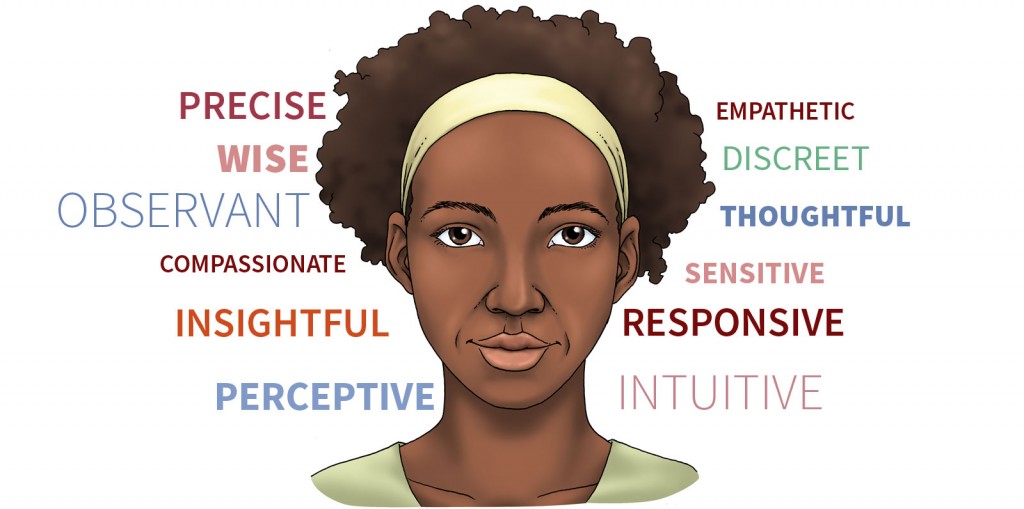
A very weird, yet interesting concept these days runs among all of us; “It doesn’t matter how other people evaluate us, what is important is how we evaluate ourselves”. I have been a proponent of this very philosophy for a very long time. I have been one to not care at all about what people tell me they think of me, let alone what they think of me on their own time (By the way, I know for a fact that these people I’m referring to, have more life than I do, and there is no one who is thinking of me and what a jerk/awesome person I am on their own time  😉 ).
😉 ).
There is another important fact I’d like to mention here. I was battling depression for a significant portion of the last two months. There were a few reasons for the same, but let’s not get in to them. Circling back, a very curious aspect of depression is; it throws everything you know in question; your thoughts, your beliefs, your existence, your self-worth, to sum up, by everything, I mean literally everything. This very philosophy of mine, of not caring about people’s perception of me was one of the facets of mine that were thrown in to question by depression.
After quiet contemplation, which lasted for over two months, and was not really that quiet if I’m being honest, I realized, that I really have no business being influenced by what people think of me or how they perceive me. However, the not-so-quiet contemplation gave me quite a few new perspectives about myself. In order to recover from the aforementioned problem, I had to do something that replaced it. I needed a “new identity” for myself. I needed to be able to define myself as someone or something of value.
This “new identity” charade (among other things) gave me this crazy idea; what is this “new identity”? I mean, why exactly do I need this new identity? The answer to these questions was quite the revelation for me, and the consequences outweighed the supposed benefits. I’ll start off with the answer first. “I need this new identity to know myself. Who am I? What are my drivers? What are my strengths and weaknesses?” and the whole self-discovery drama that goes on. “Yeah well, cut it out” was the answer I got to this answer. I needed this because I felt awful, and that’s not something I wanted to describe myself as. Anyways, what I realized was, I was there in the dumps because of this same need to describe myself as something or someone.
I liked to believe that I was someone who did whatever he did only when it had meaning according to me, and that’s how I liked to portray myself. This very notion of “having meaning in everything I did” was the primary cause for me reaching a depressed state. Why? Because in order to keep this facade up, I took actions that no matter how stupid, seemed perfectly justified to me. “At least I’m being true to myself” was something I used to tell myself on a constant basis. This very statement struck right home to me, but it took me over two months to realize this.
In life, we are constantly evaluating ourselves based on certain metrics. These metrics are what I now call the “description criteria“. It’s kind of a thing now a days (wink wink, Barney Stinson fans). Everyone of us has these criteria we use to evaluate ourselves, no matter how oblivious we are to them. The oblivion is best described by a statement that becomes our pet response to a multitude of situations; “That’s just who I am”. This statement is a big time representation of the action we love to not take and discount something that we know is not right. So, our anger is justified, our hatred is justified, our miserly nature is justified.
Now these criteria can be bifurcated. Some of us go through our entire lives as fat, thin, short, tall etc. These are physical description criteria for ourselves. These criteria are more evident to us, because they are tangible. The more intense, and invisible, mostly are the psychological description criteria. These are our beliefs. These beliefs translate to our reactions to various situations, like anger, frustration, care, love, hate and what not. Some of my criteria used to be not going back on my word (which probably represented honor), even if the word I had given required me to donate both my kidneys to a rat hospital to save a possum who would later go on to kill 23 people in a malnutrition prone village in Africa (No, this never happened, I’m almost certain).
I’m in no way, shape or form suggesting it is bad to have these criteria. I am suggesting that while we evaluate ourselves based on them, wouldn’t it be a smart choice to evaluate these criteria periodically? Let me divulge why I think so. In the recent past, I took a few actions, said a few words that disturbed people as a response to my own criteria. If I could go back and redo those things, I most certainly would. But these occurrences also taught me that whatever actions we take or words we speak, based on our own description criteria as their premise, could be tremendously not-pleasant to our own selves.
So, let’s make sure, that the premise based on which we describe ourselves, shouldn’t be flawed, because the descriptions we create for ourselves in our minds might not get reflected as they should. And if they don’t, doesn’t it defeat the whole purpose of having these criteria in the first place?


 Facets of Life
Leave a reply to Varun Gautam Cancel reply