“This too shall pass” is probably one of the most heard sayings across the globe. This applies in every single situation we face. However, there is one very interesting contradiction I have observed going through life.
Today, let’s take a look at what percentage of our life’s occurrences we find more permanent than the other, and see how accurate is this facet of life.
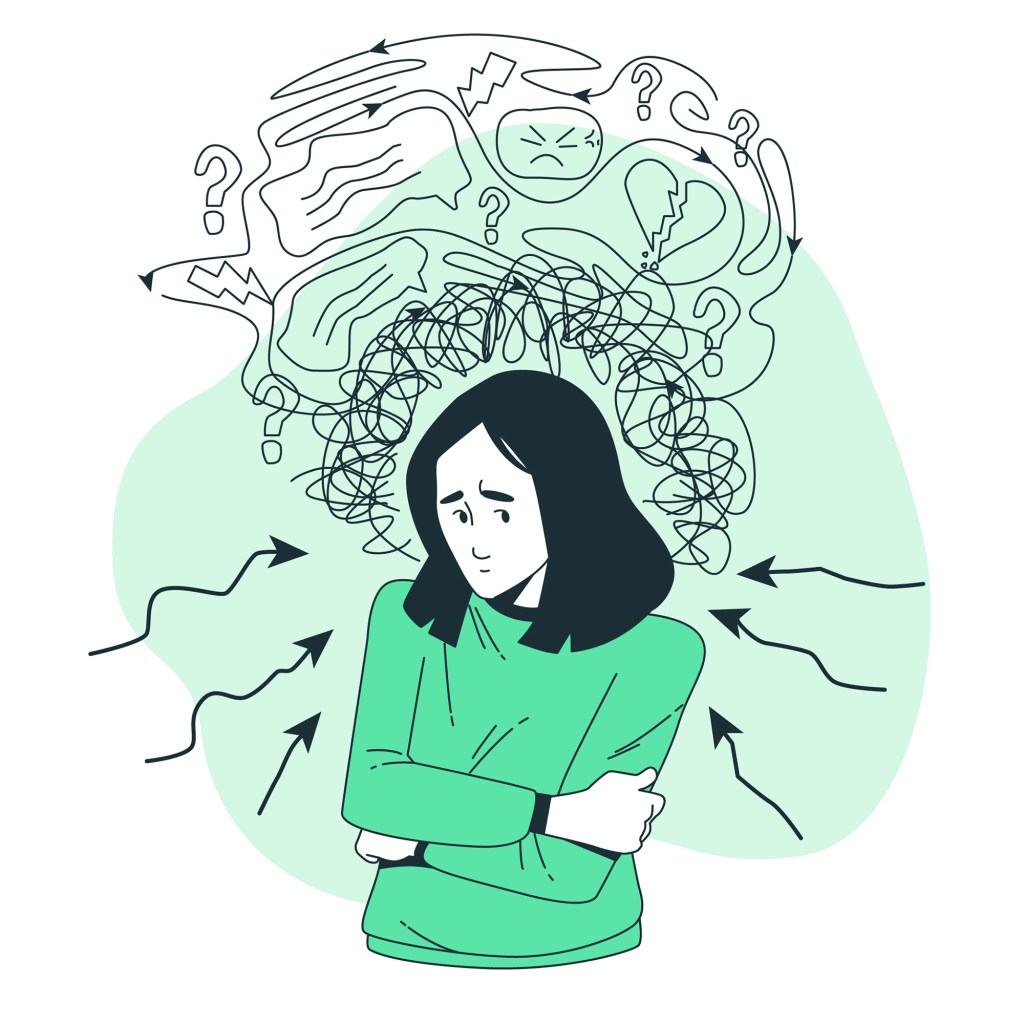
It’s difficult to look on the bright side when you’re surrounded by negativity.
Amy Morin
Introduction
I hope no one gets offended by this statement, but I am a very firm believer that the universe operates on perfectly balanced principles. Everything happens for a reason. And no matter how illogical something might look in a given moment, in the grand scheme of things, everything has its place.
However, not always am I able to retain this ability of being a believer. In the famous words of Rag’n’Bone Man, I’m only human, after all.
A lot of us have been through some really turbulent circumstances all throughout this year. And to add to this uncertainty, we still have a quarter left in the year.
The world around us is changing faster than time is passing, it seems. There have been innumerable transformations in all industries, and this seems to just be the start.
I’m going to sound like a business book, but technology has truly become inseparable from any and every industry we can think of. Not only that, technology is now making human beings separable from businesses.
We have seen and heard countless stories of career trajectories being altered. People have lost their livelihoods to computers. We have witnessed organisations laying off massive percentages of their human workforces in favour of computers. All because they are supposedly cheaper, quicker & by virtue of that, being considered better than humans.
As a matter of fact, I had been putting off writing these articles for a while, partly being de-motivated due to the the widespread murmurs that artificial intelligence has effectively rendered this industry of the written word obsolete.
These times have made me question whether everything is actually balanced, and if these circumstances are ever going to change, let alone end.
While I have been painting this grim image so far, the last sentence I wrote is the one that actually prompted me to punch my digits on the keyboard and get some clarity, while sharing this with you.
The thought that crossed my mind was, if this moment has presumed unending turbulence, why don’t I feel the same when something positive happens in my life?
Negativity Bias
I scanned through as large a chunk of my life as my next cell phone notification allowed me (Shocker, right?). And most interestingly, I found that every happy moment of my life was happy only for a few days, if not less. On the contrary, I remember some very bad phases of my life in vivid detail.
It appears I am not the only one who has thought about this (Again, Shocker, right?). According to studies conducted by numerous prestigious institutions, we tend to remember negative circumstances more vividly and for a longer period of time than any positive circumstance. This psychological principle is called “Negativity bias”.
Think about it, there are numerous instances of people carrying the fear of drowning way into adulthood because of an incident that happened during early days in their lives. Moreover, the entire discipline of psychology is based on mental aspects like childhood trauma.
We have people who develop innumerable disorders due to something that happened way back in their lives. For example, a man becomes less trusting, less social and in general less happy because of a relationship that didn’t work out well three years ago.
(Just FYI: this is a completely arbitrary example, and any resemblance to anyone living or dead is completely coincidental).
On the contrary, a person getting promoted at his workplace will forget about it as early as three days after the fact. Once everyone around him extorts a treat out of him, he is done. He would rather focus more on the newer problems he is going to face after transitioning to his new role.
Simply said,
A negative outcome to any situation seems more permanent and more impactful than a positive outcome.
Why is negativity bias important?
The question then arises, why is it so? Why does the negative outweigh the positive in a raw mind? Why do we tend to be more inclined to remember something that makes us more stressed and forget something great that might have happened to us very recently?
As it turns out, we build this permanence because of an evolutionary reason. This is because our brain likes to remember these negative circumstances to guard us against them in the future.
Let’s take the same positive and negative examples we used in the previous section of the article.
A person who went through the failed relationship will tend to be more averse to being more social because he would want to be constantly aware of the pain that he experienced when things didn’t work out, so that he can avoid it in the future.
On the other hand, a person who has recently been promoted does not want to exact a toll on his mental bandwidth, and focuses on his new role because amongst other reasons, he wouldn’t want to be deemed unworthy of his promotion, which could be a possible result of his not being able to fulfil his responsibilities after his promotion.
Conclusion
Now, things might make more sense about why we tend to remember for a longer time and assign more weightage to negative incidents that happen in our lives. But as always, I have this weird, daunting question which I’d like to ask you to think about, and help me with if you can.
Is positivity a consciously chosen response at all times? Because that’s how it appears to me. See, If we feel negatively after a negative event, and we eventually feel negatively after a positive event, when exactly are we supposed to feel positively, unless we choose to do so?
Do let me know what you think in the comments. 🙂
If you stuck around this far, thank you for your time. If you enjoyed this, share this with one friend of yours whom you think might like reading this. Thanks for reading, and I will see you in the next one. 🙂


 Facets of Life
Leave a reply to brevityschooladmin Cancel reply